A Guide to Fractional Data Engineering Services in 2026
Your team has a critical data initiative on the roadmap. It could be a Snowflake migration, a new pipeline architecture, or implementing a data governance framework. The problem is your core team is at capacity. Hiring a full-time senior data engineer is a six-month process you cannot afford, and a major consulting firm is overkill.
This is the gap fractional data engineering services fill.
What Are Fractional Data Engineering Services?
The fractional model provides on-demand access to a senior-level data engineer who integrates directly with your team for a “fraction” of their time—typically 10-25 hours per week.
These are not advisors who deliver a PowerPoint deck. They are hands-on-keyboard builders who execute specific, high-impact tasks. This model surgically applies senior talent where you need it most, without the overhead of a full-time employee or the rigid structure of a traditional consulting engagement.
According to DataEngineeringCompanies.com’s analysis of 86 data engineering firms, this model is gaining significant traction. It allows engineering leaders to accelerate key projects—like setting up a new Databricks environment or optimizing AWS data infrastructure—without derailing the core team’s focus.
Fractional vs. Full-Time Hire vs. Project Consulting
This comparison table clarifies the strategic fit for each model.
| Attribute | Fractional Services | Full-Time Hire | Project-Based Consulting |
|---|---|---|---|
| Cost Structure | Predictable monthly retainer. Rate benchmark: $175-$300/hour. | Full salary + benefits + overhead. $180k-$250k+ annually. | High upfront project fee. $100k-$500k+ per SOW. |
| Commitment | Low (Month-to-month) | High (Long-term employment) | Medium (Project duration) |
| Expertise Access | Senior, specialized talent | Varies by hire | Team of mixed-level talent |
| Integration | Embedded within your team | Fully integrated | External, SOW-driven |
| Time to Impact | Days to weeks | Months (3-6+ for hiring and onboarding) | Weeks to months |
A full-time hire is for long-term, core team growth. A large consulting project is for massive transformations. Fractional services offer a blend of flexibility, deep expertise, and speed for targeted, high-priority challenges.
When to Use a Fractional Data Engineer
Bringing in a fractional data engineer is about surgical precision. You face a specific, high-stakes problem that your current team cannot tackle without derailing their work, and you need senior expertise now. This is a common scenario, detailed in analyses of why companies are turning to IT contractors.
Key Use Cases for Fractional Expertise
Common triggers for engaging a fractional partner include:
-
Accelerate a Critical Migration: Your team is keeping the lights on. A fractional expert leads a complex migration to a platform like Snowflake or Databricks, architecting the new setup and managing the move while your team maintains operations.
-
Design Scalable Data Architecture: You are launching a new product and cannot afford for its data pipelines to fail at scale. A fractional architect designs the system from the ground up, applying battle-tested patterns to get you to market faster and with less risk.
-
Evaluate and Implement New Tooling: A fractional engineer provides an unbiased, expert opinion on vendors for tools like dbt or Airflow. They have seen what works in the real world and can guide selection and implementation.
-
Backfill a Leadership Gap: Finding a Head of Data takes months. A fractional leader can step in to keep key initiatives on track, mentor the team, and provide strategic direction, preventing a loss of momentum during the search.
This decision tree shows when a fractional hire makes the most sense.
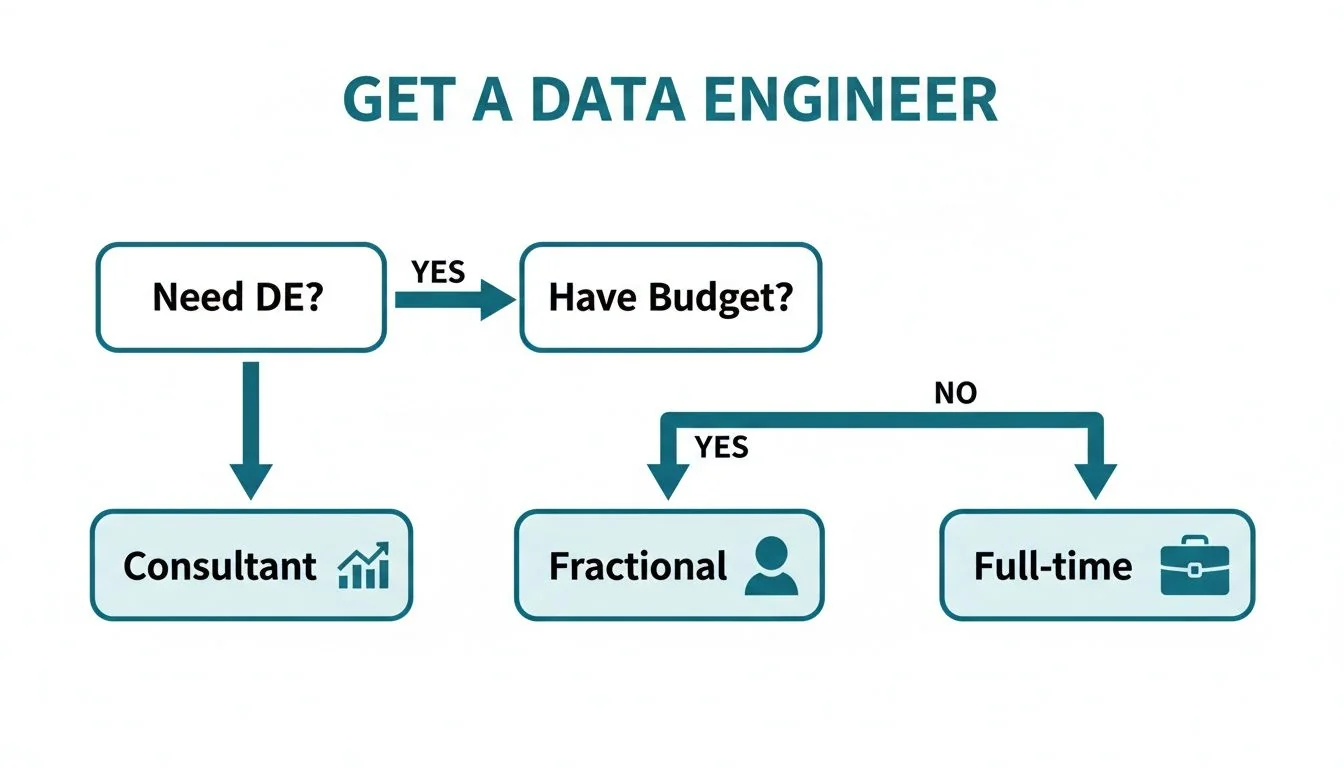
When you have a specific, project-based need and a clear budget, the fractional model gives you a direct path to top-tier talent without the overhead and commitment of a full-time employee.
How Fractional Pricing and Engagements Work
The fractional model’s flexibility extends to its engagement structures. The cost is a different financial equation. Companies can land a senior data architect and an analytics engineer for under $10,000 per month. This provides top-tier talent without recruitment fees, benefits, or long-term payroll commitments. You can see a breakdown of this fractional team structure in action.
3 Primary Fractional Engagement Models
Most fractional arrangements fall into one of three structures.
| Engagement Model | Best For | Typical Structure |
|---|---|---|
| Monthly Retainer | Ongoing support, architectural oversight, and team mentorship. | A block of 20-40 hours per month for a flat fee. |
| Block of Hours | A single, well-defined project with a clear deliverable. | A set number of hours purchased upfront for a specific goal, like a POC for dbt or Apache Airflow. |
| Dedicated Part-Time | Long-term leadership on a major initiative, requiring deep team integration. | A consistent schedule, like 2-3 days per week, functioning as a true team member. |
Retainers provide access to an expert, a block of hours completes a task, and a part-time role delivers project ownership.
As you weigh these options, understand the project pricing models. Our guide on fixed-price vs. time-and-materials contracts provides clarity for procurement.
Who Are Fractional Data Engineers?

Fractional work is not a training ground for junior engineers. Fractional data engineers are senior specialists—veterans who have built, scaled, and repaired data platforms at major tech companies and fast-growing startups.
They are architects and principal-level experts. The analysis by DataEngineeringCompanies.com of 86 data engineering firms found that the most effective fractional experts bring 15+ years of hands-on experience. They have deep expertise in specific domains like Snowflake architecture, Databricks optimization, or multi-cloud infrastructure across AWS, Azure, and GCP.
Why Top Talent Chooses Fractional Work
Senior engineers go fractional to focus on solving difficult technical problems, escaping the meetings, politics, and management tasks of full-time leadership positions.
Fractional work allows them to apply their expertise across various industries—fintech, healthcare, enterprise SaaS—without corporate overhead. This is not an entry-level path. Market analysis from the growth and experience levels of fractional professionals shows that 72% of fractional professionals have 15 or more years of experience, and a significant 30.4% have over 26 years. Only 6.4% have less than 10 years of experience. This model is built on a foundation of proven, high-impact experts.
How to Evaluate and Onboard a Fractional Partner
Vetting a fractional data engineering partner is not like a standard interview. You are vetting a specialist for their ability to deliver immediate, targeted impact. The right choice accelerates your data roadmap in weeks. The wrong one burns your budget.
Your Actionable Evaluation Checklist
Use this checklist to screen potential partners before signing a contract. For a more comprehensive guide, review how to evaluate data engineering vendors.
- Hands-On Technical Validation: Ask for proof, not just a skills list. Are they certified in your platforms (Snowflake, Databricks, AWS, Azure, GCP)? Probe their real-world experience with critical tools like dbt or Apache Airflow.
- Relevant Case Studies: Vague success stories are a red flag. Demand case studies that mirror your data volume, complexity, and industry. They must walk you through the problem, the solution, and the measurable business results.
- Clear Communication Cadence: A strong partner proposes a communication plan, such as daily Slack stand-ups, weekly progress reports, and bi-weekly strategic check-ins.
- Explicit Knowledge Transfer Plan: Ask directly: “What is your process for documenting work, training our team, and ensuring a seamless takeover?” A crisp answer indicates they plan for empowerment, not lock-in.
- Defined Security & Access Protocols: They must have standard operating procedures for secure system access, data handling, and a clean offboarding process.
30-Day Onboarding Roadmap for Immediate Impact
A structured onboarding process is the best predictor of a successful fractional engagement. Ambiguity in week one creates drag that can last for months. If you are looking for broader context, external resources can help you Hire a Data Engineer with the right skills.
Use this 30-day plan for execution:
- Week 1: Access and Alignment. Grant necessary access to cloud consoles, code repositories, and project management tools. The kickoff meeting must establish a clear initial goal (e.g., “Audit our primary dbt project for performance bottlenecks”) and introduce key team members.
- Week 2: Audit and Quick Wins. The partner should audit your existing architecture, documentation, and code. By the end of the week, they must present initial findings and at least one “quick win”—a small, high-impact fix they can implement immediately.
- Weeks 3-4: Execution and Reporting. The partner executes on the primary objective. The agreed-upon communication rhythm should be active, with clear progress updates and immediate flagging of any roadblocks.
Red Flags to Avoid When Hiring Fractional Talent

Choosing the wrong fractional partner sets you back months. Spot the warning signs that separate a strategic partner from a glorified freelancer.
The most telling red flag is a pitch that sounds like a laundry list of tech buzzwords. A provider who cannot explain why a certain platform is the right fit for your specific business problem is building what’s comfortable for them, not what’s effective for you.
Vague Expertise and Unclear Processes
Pay close attention to their track record. If success stories lack specific metrics on performance gains or cost savings, the impact they delivered is questionable. A partner’s inability to detail their offboarding process is a clear sign they intend to create vendor lock-in. A true expert builds systems your team can own and operate independently.
Questionable Pricing and Overcommitment
Be wary of rigid contracts that lack clearly defined Service Level Agreements (SLAs). You need concrete commitments on response times and deliverables, not vague promises. Unusually low rates often mean you’re getting a junior engineer disguised as a senior expert, which leads to technical debt.
Finally, ask them directly about their current client load. A fractional engineer stretched across too many projects will lack focus. This results in missed deadlines, rushed work, and a partner who is too busy to give your project the attention it requires.
Next Steps
Your decision framework is clear. If you have a specific, high-impact data engineering project that is blocked by your team’s capacity, and you require senior-level expertise immediately, a fractional engagement is your most direct path to execution.
- Define the Scope: Identify the single most critical project. Write a one-page brief outlining the problem, the desired business outcome, and the key deliverable.
- Set the Budget: Based on the benchmarks, determine a realistic monthly budget for a retainer or a fixed budget for a block-of-hours project.
- Initiate Vetting: Use the evaluation checklist in this guide to begin conversations with at least two potential fractional partners. Demand specific, evidence-based answers.
Do not let critical data initiatives stall. Engage a fractional expert to build momentum and deliver results now.
Data-driven market researcher with 20+ years in market research and 10+ years helping software agencies and IT organizations make evidence-based decisions. Former market research analyst at Aviva Investors and Credit Suisse.
Previously: Aviva Investors · Credit Suisse · Brainhub · 100Signals
Top Data Engineering Partners
Vetted experts who can help you implement what you just read.
Related Analysis
The 10-Point Data Engineering Due Diligence Checklist for 2026
Don't hire a consultant without this data engineering due diligence checklist. Vet firms on architecture, cost, governance, and team skills before you sign.
Your Guide to Data Engineering Consulting Services
Unlock the value of your data. This guide to data engineering consulting services covers costs, vendor selection, red flags, and platform-specific insights.
Your Data Pipeline Cost Guide: How to Benchmark & Budget for Consulting Engagements
Engineering leaders: This data pipeline cost guide offers consulting benchmarks, platform comparisons, & a budgeting framework. Optimize your spending.